Wakeskate Shoes: which ones to choose and what to really pay attention to
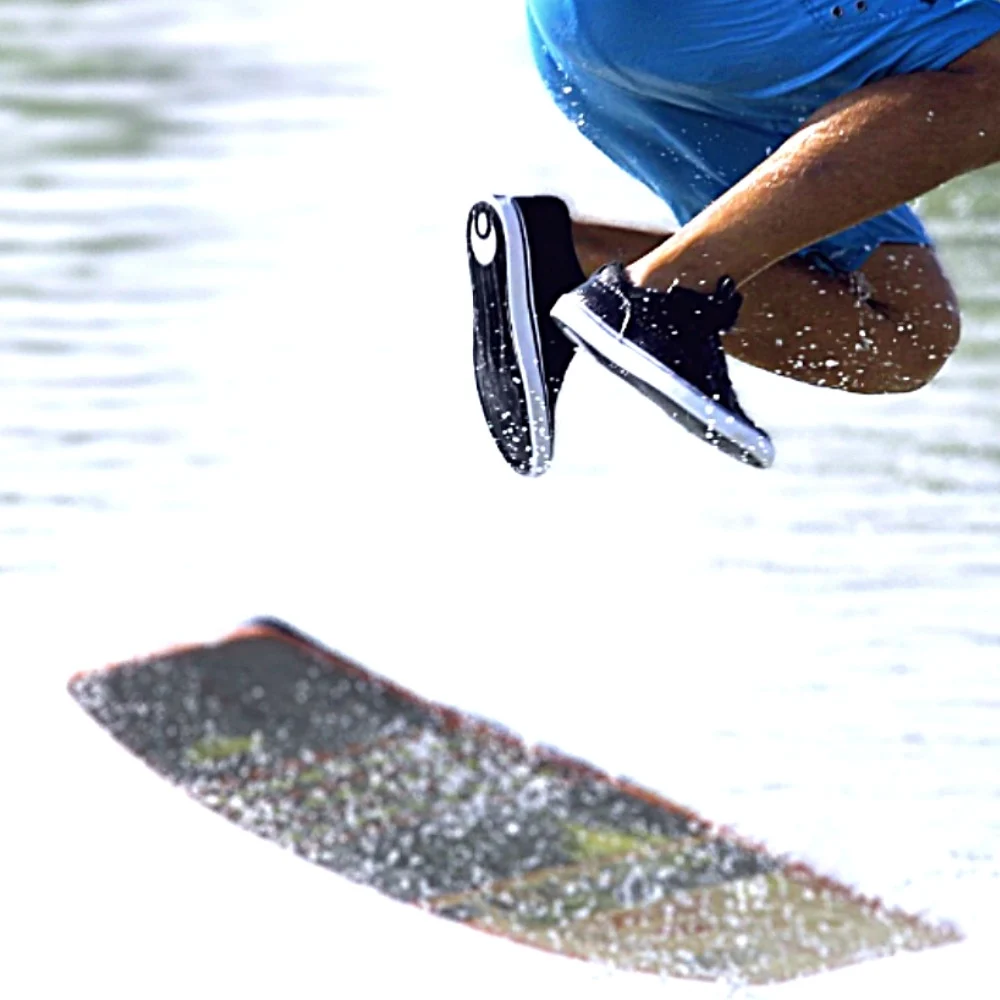
Wakeskating combines elements of street skateboarding, but with the difference that it is practiced in contact with water, and therefore requires a shoe that can provide comfort, support, and grip in wet conditions.
In the 2000s, dedicated wakeskate shoes actually existed: the Reef Byerly, with a waterproof upper and real drainage channels, or a wakeskate-specific shoe from DVS. The market was too small to sustain them, and those models disappeared years ago. Today, wakeskaters use regular skate shoes—the same ones you find for street skating. But not all of them perform the same after the tenth wet ride: some hold up very well, others start to give you problems—from the insole that peels off to the upper that stiffens like cardboard once dry. In this guide, we'll tell you what to really look for before buying, based on what we've learned from testing different models on the cable, season after season.
Brands like Nike SB, DVS, Vans, DC, Etnies and Volcom are among the most popular in wakeskate and offer various interesting models.
There's no such thing as a true "wakeskate shoe"—and that's okay.
Don't expect a dedicated technical product like wakeboarding, where there are specific boots. These are true skate shoes, designed for street use, adapted for use in the water. Any good skate shoe can be used for wakeskating, but certain features become much more important when the shoe is constantly switching between dry and wet conditions.
What to really look for in a wakeskate shoe
These are the things that, in our experience, really make a difference — you won't find them in an Amazon spec sheet.
Upper: neither too thin nor too thick
An upper that's too thin will wear out quickly with constant use in the water. A sturdy upper, like heavy fabric or semi-suede, offers more comfort and durability—but it has a counterintuitive flaw: after repeated wet-dry cycles, it tends to stiffen considerably, almost like cardboard, and needs to be soaked a bit before each outing to soften it up again. Materials more similar to those used by Nike tend not to have this stiffening problem, but they wear out more quickly and offer less protection to the foot.
The insole must remain anchored to the sole
It's the detail that almost no one mentions, but it makes the difference between a comfortable shoe and one that's annoying to wear. In several models, after a while of use, the insole begins to move slightly relative to the sole—especially at the heel and in the middle of the foot. It's not dangerous, but it's very annoying when you're walking. It's worth looking into this specific aspect before buying, not just for grip and general comfort.
The sole must find a balance between grip and durability
Wakeskateboard grip is abrasive: it wears down the sole over time, especially at the toe, where the foot places more weight during tricks. A second tradeoff also comes into play here: a softer rubber provides a better feel with the board but wears out faster, while a harder rubber lasts longer but feels less immediate underfoot. More abrasion-resistant soles last much longer before wearing out in those critical areas.
The water it absorbs must not be excessive
No skate shoe is waterproof. Some models absorb a little more water than others, temporarily making them heavier—it's not a dramatic problem, but it's a trade-off to consider: greater coverage and comfort or lighter weight?
How to make a used wakeskate skate shoe last longer
One simple thing that makes a big difference is how the shoe is dried after each outing.
Avoid leaving it in direct sunlight for hours: drying too quickly can cause some materials to stiffen more quickly, putting more stress on the glues and foams inside. It's best to let it dry naturally in the shade, in an open area.
If you're sailing in the sea, a quick rinse with fresh water helps remove salt, which can ruin materials and seams over time.
Best wakeskate shoes: tested and recommended models
We haven't tested every single model on the market—so below you'll find two types of recommendations: one based on experience, and one based on brand logic and typical construction features.
Tested and rated by riders:
- DVS Penza —over a year of intense, continuous use throughout the season, summer and winter. They're the best compromise I've tried so far: extremely durable, well-anchored insole, and a sole that resists abrasion and wears very slowly at the toe and heel compared to other brands I've tried. The upper tends to harden considerably over time, but after a minute of soaking, they regain their natural softness. One practical flaw: it's a difficult model to find in stock.
- DVS Quentin (discontinued) — durable, well-anchored sole, but slightly heavier and absorbs a little more water than the Penza (not excessively).
- DVS Daewon —a good balance between feel and durability. Flexible, comfortable, and without any noticeable flaws: a balanced choice for those looking for a skate shoe that can also be used in the water.
- DVS Rico —very flexible and with an excellent direct feel on the board, but less durable than other more structured DVS models. Interesting for those who value lightness over durability.
- Nike SB — excellent but generally less durable than DVS, they wear out more quickly.
- Nike Court Vision —very durable and long-lasting, but stiffer and less flexible than classic Nike SBs. They tend to absorb more water, but they can be a good choice for those looking for a sturdy shoe with a more solid structure that helps cushion landings after challenging tricks like shuvits and kicker jumps.
- Vans Wayvee — good overall, but with a recurring flaw in some models: the insole tends to move slightly over time, especially on the heel and center of the foot.
- Vans Atwood - one Vans Simple and versatile, with a classic skate feel. The basic construction and affordable price make it a good choice for wakeskating, but it's not designed to withstand the same level of stress as more robust models like the DVS or DC.
- DC Metric —very durable and comfortable, they absorb little water and don't tend to stiffen when dry. The sturdier construction, however, sacrifices a bit of direct feel from the board compared to softer, more flexible shoes. Excellent overall durability: they're replaced more often due to the sole wearing out than the shoe itself. Very easy to put on and take off without having to loosen the laces every time.
- Etnies Joslin — Durable shoe with good board feel. The upper tends to stiffen after many wet/dry cycles, but softens again after a brief soak before use.
Evaluation for brand logic:
- Other DC models — typically more padded/cupsole construction than Vans or Etnies, which usually means more impact protection but less direct feel with the board.
- Other Etnies models — more similar construction to Vans and DVS, generally vulcanized and lightweight.
- Volcom — less present in skateboarding than other historic brands, but still produces skate-style models that also perform well in the water.
- Reef — had a proper skate division since the mid-'90s, complete with professional riders, as well as the Byerly wakeskate line. Today, the brand has shifted almost entirely to sandals and beach shoes: it's no longer a relevant choice for those looking for skate shoes.
Want to learn more about a specific brand?
Each brand has different construction characteristics — below you'll find a complete breakdown of each, along with our selection of models.
Which one to choose based on how you use the wakeskate
- Intense and frequent use throughout the season → priority given to the resistance of the sole and insole (DVS Penza type).
- Occasional use, a few outings per year → a cheaper and more basic model is also fine, such as a Vans based.
- You also want to use it on the street as a daily sneaker before taking it into the water → a Nike SB model or Vans in the more lifestyle line it holds up better to double use, knowing that it will wear out more quickly when used specifically in water.
Best Wakeskate Shoes: deals available online
While there isn't a specific line of wakeskate shoes, the selection includes the best skate shoes for construction, grip, and durability—with priority given to models we use and recommend directly.


In short (Italian only)
After years of wakeskating, we've learned one thing: there's no one-size-fits-all shoe. There's one that best suits your tastes and the compromises you're willing to make. Some people prefer a lighter shoe even if it'll last less, while others focus on durability, accepting a few extra grams or a slightly stiffer upper. Pick a pair, wear it for a while, and see how it feels. It's by trying different shoes that you begin to understand which features truly make a difference for you.
About Wakesquare

Share this article


Advertising provided by Google
Recently Read
Amazon Affiliate Advertising